
Workers Guide: What Each Role Automates
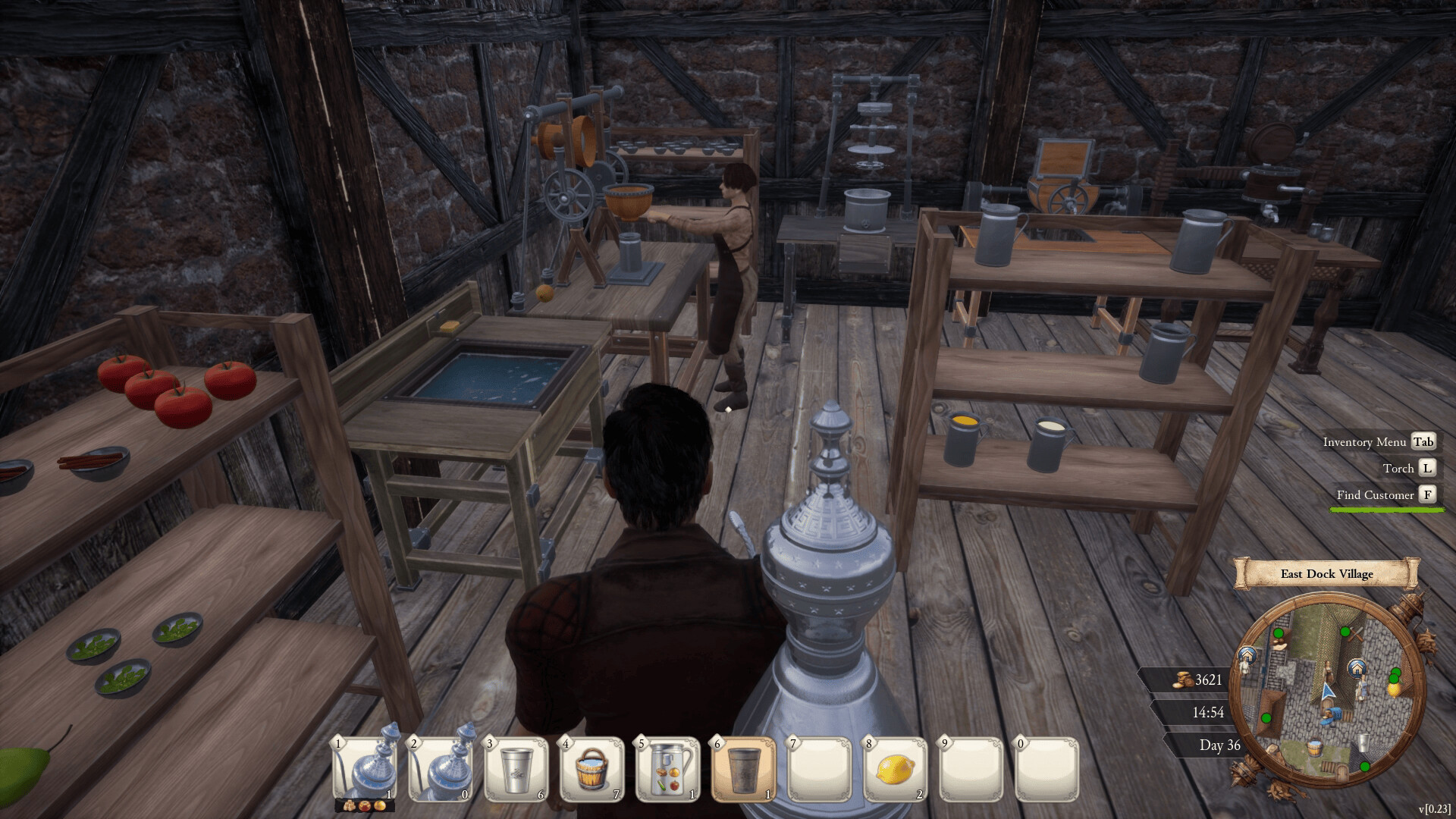
Workers are for removing a specific bottleneck, not for replacing the whole business at once. Steam lists six roles: Seller, Citrus Worker, Dishwashing Worker, Juicer Worker, Mixing Worker, and Shopper. Hire toward the task that consumes the most of your attention—usually serving, washing, ingredient runs, or a production station you are constantly operating.
Official worker roles
| Worker | Best mental model |
|---|---|
| Seller | Keeps customer-facing sales moving |
| Citrus Worker | Takes over the early citrus-processing step |
| Dishwashing Worker | Prevents clean cups from becoming the sales bottleneck |
| Juicer Worker | Automates broader juicing work as the production line expands |
| Mixing Worker | Reduces time spent at the Mixer for modifier-heavy recipes |
| Shopper | Cuts ingredient-fetching travel and restocking friction |
Those role names match the Steam feature list. Exact wages, unlock conditions and productivity values are left open because they may change between launch versions.
Which worker should you hire first?
Hire against observed downtime.
- If customers wait while you scrub cups: Dishwashing Worker.
- If you spend the day walking to sellers: Shopper.
- If a multi-recipe setup keeps you stuck at machines: Citrus/Juicer/Mixing Worker depending on the station.
- If production is ready but selling consumes the day: Seller.
The wrong first hire is the one that automates a machine that is already idle.
Workers do not remove recipe planning
The official description ties business growth to recipes, customer preferences, machines, properties and workers. Automation therefore sits after the matching decision: you still need to decide what to make, for whom, and in what quantity.